

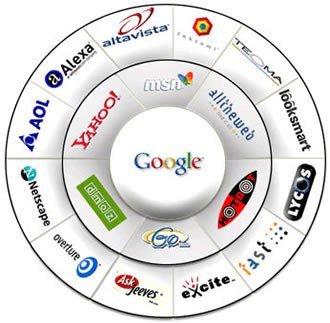
As you may be aware if you have an interest in Search Engine Optimisation (SEO), Google tweaks its search algorithm regularly. Last year there were fifteen major changes, as well as several minor updates. The 2013 Hummingbird update impacts more than 90% of searches worldwide, making it one of the biggest changes to Google’s algorithm in recent years. The aim of Hummingbird is to improve the semantic search capabilities of the search engine, the idea being that improved understanding of intent and context should produce more relevant results.
 What does this mean for 2014?
SEO is constantly evolving. Approaches to SEO, which have been effective in the past, have now become obsolete. Updates from previous years influence the way SEO works today, which is why we need to consider the following changes:
100% (not provided)
Last year Google decided to enable secure searches for all users. Thanks to SSL encryption, keyword information is no longer shared.
To see this for yourself, if you’re using Google Analytics, take a look at Acquisition > Keywords > Organic. The top position is probably taken by (not provided), which indicates that the visitor used a secure search. Now organic traffic from Google can no longer be tracked at a keyword level, which means that we miss out on valuable information about our visitors because of this change, making it more difficult to optimise websites for relevant keywords.
Be that as it may, Google wants us to stop focusing on keywords and concentrate on producing quality content, which brings us to the next change.
Topics instead of keywords
The loss of keyword data and the introduction of the Hummingbird update forces us to move from focusing on keywords to topics.
As aforementioned, Hummingbird places more emphasis on context and user intent. Google is now able to show web pages that answer search queries even if the page is not optimised for that query.
Naturally, this will have a significant impact on the way SEO will work in the future. Instead of optimising a page for a certain keyword, we have to create content around topics, defining coherent keyword groups that can all be served by the same content.
In-depth articles
In August 2013, Google introduced in-depth articles, which is a new type of search result. These results appear in a separate block on the right-hand side and provide high-quality content to help you learn about a certain subject.
There are several ways of improving the probability of appearing in the in-depth article list. Structured data plays a big role.
Once again, this shows the importance of quality content. Shallow content with little or no extra value will not make it to the in-depth articles block. Taken with the goal of the Hummingbird update (topics instead of keywords), it becomes clear that Google wants people to create high quality content with a focus on the user’s intent.
Link building
Links are, of course, still the essence of SEO. Search engines see each link to a website as a ‘vote’ for that website. The more links a page receives, the easier it becomes to rank accurately.
Quantity per se is unimportant, but quality also plays a big role. Link spam (often via automated software) is able to quickly create hundreds or thousands of links by dropping URLs with optimised anchor text on forums and comment sections. These links may be easy to build, but offer little or no extra value to the visitor.
Plenty of such websites with suspicious link profiles have already received unnatural link warnings from Google, which limits their visibility in the search results and forces them to clean up their link profile.
Page structure
Structuring a page well helps the search engines to understand the contents of that page. Unfortunately, HTML markup is too limited in defining the true meaning of various elements, though this has somewhat improved with the introduction of HTML5. There are plenty of new tags (for example <article> and <section>) that can be used to organise page content and help the search engines. Currently it isn’t completely clear how Google handles these tags, but it’s undoubtedly a good idea to start implementing these tags in projects and consider the semantics of web page markup.
Structured data may also be a solution, which helps search engines to understand the content of a page and can also improve visibility in the search results via rich snippets (and the new in-depth article box). Examples of rich snippets are video thumbnails, prices or a star ratings. These elements can give a web page a nice boost.
Another type of rich snippet is authorship markup, as authorship information enables linking an article to the Google+ profile of the author. This causes a small profile avatar image to be displayed next to the search result.
Google gives each author an AuthorRank. Popular authors could have their associated content rank higher than unsigned content or the content of other less authoritative sources. Once again, the quality of the content you produce is of paramount importance.
 Mobile users
I probably don’t have to tell you that, with the increase in sales of smartphones and tablets, more and more visitors are using a mobile device to browse the web, which is why a mobile-friendly site is important.
Google recommends a responsive design for three reasons:
- A single URL makes it easier for users to interact with;
- No redirection is needed, which reduces loading time;
- It saves resources for Google’s search engine crawlers.
The second point is about loading time. A couple of years ago, Google incorporated site speed into its search engine algorithm, which means that a page that is slow to load can harm your ranking. Remember that it is important now to optimise your site for page speed.
Social media
Although social media can bring in lots of visitors, it still does not have a big influence on your rankings. (There is a correlation between social media and rankings, but no causation.) This might change soon, though, so it’s still a good idea to start building a social presence. Remember to add Open Graph markup to your pages to optimise social snippets.
Conclusion
Although there aren’t any drastic changes to the way SEO will function in 2014, we still need to provide relevant content and a good user experience for visitors to our websites. Here are some additional tips that might help your SEO efforts:
- Owing to algorithm updates (such as Hummingbird), focus on topics instead of keywords.
- Quality content is more important than ever.
- Avoid suspicious links from comment spam, link networks, etc.
- Implement structured data in your web pages.
- Link your articles to your Google+ profile via authorship information.
- Optimise your site for all users, irrespective of device.
- Try to reduce the loading time of your pages as much as possible.
- Optimise your social snippets via Open Graph tags.

Edward Solomon has over 30 years’ experience in project management, technical education, computer networking, web design and development and is a Digital Business Consultant for PENNInk Productions Ltd.