

As a small business owner, you know that your brand is everything. Your brand is the face of your company, and it’s what your customers recognise and remember. Good design is crucial for small businesses, as it can make or break your brand identity. However, design blunders can happen, and they can hurt your brand identity and turn potential customers away. In this article, we’ll explore some common small business design mistakes, provide actionable tips on how to fix them, and share some case studies of successful design makeovers.
The importance of good design for small businesses
Good design is essential for small businesses. It can help you stand out from the competition, create a memorable brand identity, and attract more customers. A well-designed brand can communicate your message and values clearly, making it easier for your customers to connect with your business.
On the other hand, poor design can be a missed opportunity that can cost you customers. A cluttered website, outdated logo, or inconsistent social media graphics can make your business look unprofessional and unappealing. Investing in good design can have a significant impact on your business, and it’s worth the time and effort.
Common design blunders made by small businesses
Design blunders can happen to anyone, but they are especially common among small businesses. Here are some of the most common design mistakes made by small businesses:
1. Outdated logos
Your logo is the cornerstone of your brand identity, and it’s the first thing that people notice about your business. If your logo looks outdated, it can make your business look unprofessional and unappealing. Updating your logo can help you create a fresh and modern look that will attract more customers.
2. Cluttered websites
Your website is your online storefront, and it’s the first point of contact for many potential customers. If your website is cluttered and confusing, it can be hard for customers to find what they’re looking for, and they may leave without making a purchase. A clean and well-organised website can make it easier for customers to navigate and find what they need.
3. Inconsistent social media graphics
Social media is a powerful tool for small businesses, but it’s important to maintain a consistent brand identity across all platforms. Inconsistent social media graphics can make your brand look disjointed and unprofessional. By creating a consistent look and feel across all social media platforms, you can create a strong and cohesive brand identity.
How to fix design blunders – tips and tricks
Fixing design blunders can seem like a daunting task, but it doesn’t have to be. Here are some tips and tricks to help you fix design blunders and boost your brand:
1. Update your logo
If your logo looks outdated, it’s time for a refresh. Work with a designer to create a new logo that reflects your brand identity and values. Your new logo should be modern, memorable, and easily recognisable.
2. Simplify your website
Simplifying your website can have a big impact on your brand identity. Start by decluttering your homepage and removing any unnecessary elements. Use a clear and easy-to-read font, and make sure your website is easy to navigate.
3. Create a style guide
Creating a style guide can help you maintain a consistent brand identity across all platforms. Your style guide should include your logo, color palette, typography, and any other design elements that are important to your brand.
4. Use templates
Using templates can save you time and help you maintain a consistent look and feel across all platforms. There are many design templates available online, from social media graphics to email newsletters.
5. Get feedback
Getting feedback from your customers can help you identify areas where you need to improve your design. Use surveys or social media polls to gather feedback from your customers and use it to improve your design.
Branding and design consistency
Consistency is key when it comes to branding and design. Your brand should be consistent across all platforms, from your website to your social media profiles. Maintaining a consistent brand identity can help you build trust with your customers and make your business more memorable.
When it comes to design, consistency is also important. Your design elements should be consistent across all platforms, from your website to your business cards. This includes your logo, color palette, typography, and any other design elements that are important to your brand. By maintaining consistency in your design, you can create a strong and cohesive brand identity that will help you stand out from the competition.
Design tools and resources for small businesses
There are many design tools and resources available for small businesses. Here are some of the best:
1. Canva
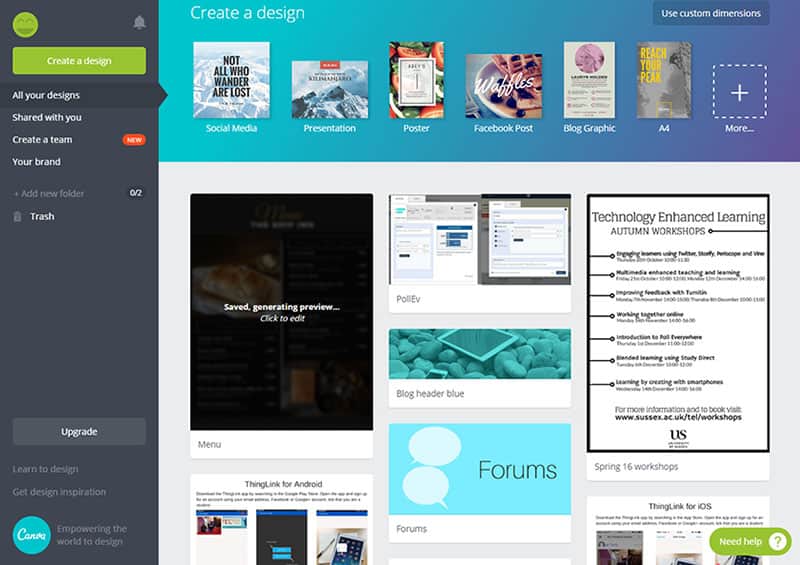
Canva is a free online graphic design tool that’s perfect for small businesses. It’s easy to use and comes with a wide range of templates and design elements.
2. Adobe Creative Cloud

Adobe Creative Cloud is a suite of design tools that includes Photoshop, Illustrator, and InDesign. It’s a bit more expensive than other design tools, but it’s perfect for businesses that need more advanced design capabilities.
3. Fiverr

Fiverr is a freelance marketplace where you can find designers to help you with your design projects. It’s a great option if you need a professional designer but don’t have the budget to hire one full-time.
Outsourcing design work – pros and cons
Outsourcing design work can be a great way to get professional results without having to do the work yourself. However, there are pros and cons to outsourcing design work.
Pros
- Professional results: Outsourcing design work to a professional designer can help you get high-quality results that you may not be able to achieve on your own.
- Time-saving: Outsourcing design work can save you time and allow you to focus on other aspects of your business.
Cons
- Cost: Outsourcing design work can be expensive, especially if you’re working with a professional designer.
- Lack of control: When you outsource design work, you may not have as much control over the final product as you would if you did it yourself.
Case studies of successful design makeovers
Here are some case studies of successful design makeovers:
1. Slack

Slack is a messaging app for teams that was struggling with a cluttered and confusing website. They worked with a designer to create a new website that was clean, simple, and easy to navigate. The new website helped them attract more customers and increase engagement.
2. Mailchimp

Mailchimp is an email marketing platform that was using an outdated logo. They worked with a designer to create a new logo that was modern, memorable, and easily recognizable. The new logo helped them create a fresh and modern look that attracted more customers.
3. Airbnb

Airbnb is a vacation rental platform that was using inconsistent design elements across their website and marketing materials. They worked with a designer to create a style guide that included their logo, color palette, typography, and other design elements. The new style guide helped them maintain a consistent brand identity across all platforms and attract more customers.
Measuring the success of your design changes
Measuring the success of your design changes is important to ensure that your efforts are paying off. Here are some metrics you can use to measure the success of your design changes:
- Website traffic: If your website traffic increases after you make design changes, it’s a good sign that your changes are working.
- Conversion rates: If your conversion rates increase after you make design changes, it’s a good sign that your changes are helping you attract more customers.
- Social media engagement: If your social media engagement increases after you make design changes, it’s a good sign that your changes are resonating with your audience.
Conclusion
Good design is essential for small businesses, and design blunders can hurt your brand identity and turn potential customers away. However, there are ways to fix these blunders and boost your brand. By updating your logo, simplifying your website, creating a style guide, using templates, and getting feedback from your customers, you can create a strong and cohesive brand identity. Outsourcing design work can be a great option, but it’s important to weigh the pros and cons. Measuring the success of your design changes can help you ensure that your efforts are paying off. By investing in good design, you can attract more customers and build a successful small business. If you think you need some help with design for your small business or charity, call our design experts on 020 8144 7931 or email us.

Lisa Penn is a Visual Communications Specialist with a background in user experience and psychology. She has held a variety of roles encompassing user experience creative strategist, architect and manager, where she has successfully bridged the gap between design, technology and development.