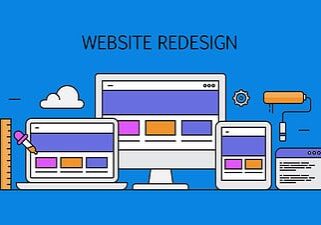

You might take the view that if something isn’t broken, you shouldn’t fix it. Unfortunately, websites don’t work that way. It may load and it may work, but that doesn’t necessarily mean that your website is great.
Your website needs to change and grow with your business. If a lot has been happening in other areas of your business, a lot should be happening with your website as well. Make sure you’re keeping everything in sync and if you spot any of the alarming signs, perhaps it is high time to redesign.
1. It’s really slow
People aren’t patient. The beauty of the internet is that you’re only ever a few clicks away from anything. If those clicks produce long loading times, people are going to start clicking somewhere else. There are a lot of things that can contribute to longer loading times. Old plugins or coding that you no longer use may be dragging down your website. Sometimes, it’s subpar hosting that can’t handle the amount of traffic or service integration on your website. You might want to investigate.
2. Parts of it don’t work anymore
Do you have information about products or services that you no longer offer? What about links that lead to nowhere, or plugins for obsolete websites or technology? These things are bloating up your website, and they’re dating it. People will see this as a sign that you rarely update your website and assume they should no longer visit for relevant content.
Housekeeping is important with a website – people don’t want things to look exactly the same as they did they last time they visited.
3. It’s infuriating to view on a smartphone
There are countless consequences that come with failing to optimise your website for mobile viewing. For one, more than half of all web traffic is mobile. If you’re not optimised, more than half of the people visiting your website are getting annoyed trying to navigate it. Another thing to worry about is how its affecting your SEO – Google doesn’t look kindly upon websites that alienate potential traffic. If your website is perfect otherwise, all you need to do is hire someone to optimise it for smartphone viewing.
4. People aren’t hanging around
If people aren’t spending a lot of time on your website, that’s a bad sign. You want them to be researching and reading long enough to become a customer. If people are leaving just as quickly as they came, it’s probably because they can’t find what they’re looking for. Your navigation might be the culprit. Clean things up and make them as sleek and simple as possible. Sometimes, a clean minimalist design is just as visually appealing as it is functional. As long as you focus on creating quality content, you don’t need a lot of complicated features.
5. Your competitor’s site looks awesome
You need to stay competitive if you want to succeed in business. If you contrast your website against your competitor’s website and you find that you don’t come out ahead, that’s a problem. Your website is a great way to brand yourself and assign your business a voice. You want your voice to be louder and your perceived authority to be greater. Your website is essentially your storefront for people who find you online, and yours needs to be the most enticing.
Remember that website design is not a one-and-done deal. There’s always room for improvements, and regular maintenance is necessary. Keep running A/B testing on your landing pages to make your website the best it can possibly be.

Audrey Robinson is a Project Assistant Manager and Content Expert at Datastical – an online knowledge library with business information. As a huge fan of technological advancements, Audrey might often be found online, reading about gadgets and technologies supporting businesses.