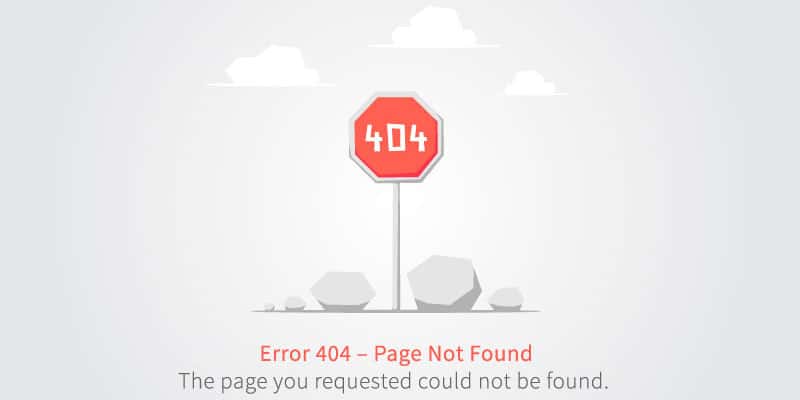
We’ve all come across 404 error pages from time to time as part of our regular journeys around the Internet. Of course, there are several reasons why these pages might appear. You might have followed a broken link, the page may have been deleted or you might have mistyped a URL. Whatever the cause, they’re extremely common around the web, and sadly, they can often be very ugly as well.
At least, that’s the case when it comes to generic 404 error pages. 404 pages are disappointing enough to see when you’re in the middle of browsing an interesting and useful site and suddenly find yourself confronted with one. However, they’re also less than welcome from a search engine optimisation (SEO) point of view for the website owner.
After all, if someone is using Google for a particular query, sees a page of yours listed in the search results and duly clicks on it, only to see a 404 page rather than the page of relevant content that they were expecting, what are they going to do?
Well, there’s a strong chance that they will hit the ‘back’ button on their browser and then head to an alternative site. When this happens a lot, Google will see that your entry in the search engine results page doesn’t provide value for that particular query, and will drop your site’s rankings accordingly.
How to get great results out of your 404 page
Now, one piece of advice you’ll probably hear from many an online marketing agency in the UK about the 404 error page is to have a customised, branded one created for your website, for example something like Pixar, for instance, or Pantone.
And there are definitely benefits to doing this. A customised 404 page permits you to continue presenting your brand professionally to visitors, even on occasions when they have lost their way. However, there’s something else that a custom 404 page allows you to do: actually bolster your site’s SEO.
You can do that in a number of simple ways. You could add internal links to your 404 page, for example, so that the user has an obvious opportunity to keep on browsing your site. This can help to prevent the effect that we described earlier of visitors immediately leaving your site; in short, this swiftly turns your 404 page from an SEO liability into an SEO asset.
There’s more that you can do, though; adding a search bar, perhaps, or maybe providing a link to your sitemap, so that the user is invited to do more of their own exploring, instead of feeling like you’re trying to ‘railroad’ them in any particular direction.
What’s the lesson from all of this?
Well, the takeaway from all of the above is what we hope any online marketing agency in the UK would say to you – that your 404 pages shouldn’t be a wasted opportunity to improve your brand’s SEO, and certainly shouldn’t be allowed to actively harm your site’s search engine rankings.
Give the PENNInk Productions team a call now, on 020 8144 7931, and we’d be pleased to talk to you about the possibilities for working together to enhance your own site’s appeal and usefulness to its target audiences.

Edward Solomon has over 30 years’ experience in project management, technical education, computer networking, web design and development and is a Digital Business Consultant for PENNInk Productions Ltd.