
Most companies set out intending to use their newsletter for lead generation. Working out exactly how to do that can be a challenge.
What’s involved with using your newsletter to generate leads? Three things:
- Qualifying
- Serving
- Engaging
A scenario we’re all familiar with
Let me preface what I’m going to tell you by describing a scenario we all know well.
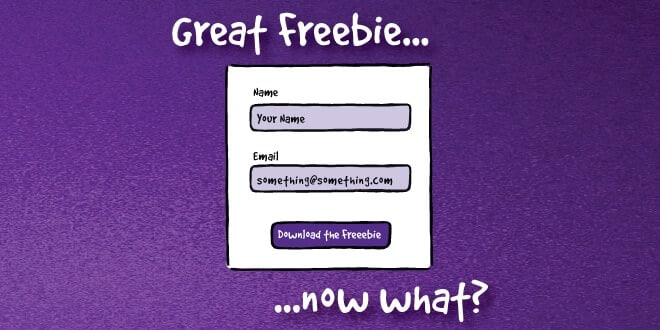
Hands up if you’ve ever subscribed to a newsletter just to get the freebie they were offering.
Your hand’s up?
Yup, that’s what I thought. I know, I’ve done it myself!
What does it get you? A cluttered desktop with PDFs piled high and no time to read a single one of them. Worse still, it floods your inbox as people try to convert you from a subscriber to a customer. You end up with less time and more desktop clutter. This is not good.
That’s precisely what you do to your subscribers when all you ask of them is a name and an email address. They sign up just to get the freebie (or maybe because they’re visiting dozens of sites on the same topic to do research) and then they’re into information overload.
You have to serve your subscribers, not indiscriminately add them.
You may think it’s your subscribers’ job to protect their inboxes. Face it, though: you know more than they do. They’ve come to you, in fact, precisely because you know more than they do. So, they rely on you to tell them whether or not they should subscribe.
1. Qualifying
One of the ways you can tell subscribers is by qualifying them.
If you have a relatively specific newsletter, you might not need to do much qualifying.
For instance, when people visit our site and sign up for The PENNInk Post, they’re clearly interested in digital marketing (websites, social media, sales funnels, etc.) which is a specific target audience.
However, if your newsletter is more ‘general interest’, you’ll need to help potential readers decide if your newsletter’s right for them.
You can do this in a variety of ways:
- Ask personal questions (household income, etc.)
- Offer an assessment
- Write an “If you meet these criteria, then you’ll enjoy our newsletter” list
You could also add some questions to your form that don’t strictly need to be answered; they make readers pause before blindly entering their email address and subscribing.
How does protecting your potential subscribers’ best interests (and stopping them from simply jumping on to your list) make them into better leads for you?
2. Serving
Qualifying your subscribers well, by protecting them from more inbox clutter, demonstrates that you value your time. That’s a powerful statement in a digital world cluttered by constant advertising.
By going about the qualification process correctly, you’re already well on your way to serving your readers.
How else can you serve your readership?
It always starts by giving them information they really need, which they can’t find elsewhere (or at least, not easily). That’s your value-add.
- For some audiences, that can mean conducting surveys and sharing the results.
- For other audiences, it might mean publishing case studies.
- For still others, it could involve writing from your own personal experience about what works and what doesn’t.
If it’s downloadable, it’s called a lead magnet.
Cherish the opportunity to connect with your readership via your Newsletter Share on XYou also serve your readers by being available to respond to questions and feedback. When you ask for feedback, how do you respond? (Or have you already forgotten your request?)
Serve readers by checking in with them regularly and by answering questions when they contact you.
Cherish the opportunity to connect with your readership. Not only does it keep you in touch with what your readers most want to learn about, it also helps me connect with them on an individual basis.
You can also serve your readers by giving them gifts. That’s something people always like to receive. It could be your time, extra reports, or special discounts. If you let your readers into your life and share parts of yourself, it can be a powerful way to serve.
Lastly, you serve your readership by creating products and services that address their needs. Of course, you charge for those products and services and it’s this final level of service that leads to the final step: engagement.
3. Engaging
The best single way to engage your readership is to create a product or service that has a very low barrier to entry. We call this a tripwire.
Create your absolute, most powerful, best, knock-me-over-with-a-feather-it’s-so-good offer. This offer must be so powerful, so perfect, that your readers can’t resist it. It has to be inexpensive and designed to get your reader to make an easy purchase because it provides them a quicker and easier method of getting the result they want.
By creating such an offer, you’ll get your readers responding, even if it’s just to write to offer feedback on what else they’d like added.
Nobody can resist an irresistible offer, even if it’s not exactly what they’re looking for.
Be sure to close the loop of lead generation by creating truly powerful offers and by offering them to your readers.
Other (equally important) ways to engage your readers include:
- Asking for feedback
- Responding to questions
- Asking questions of your own. (Do you occasionally visit new subscriber’s websites? Share some positive feedback!)
With an email newsletter, it’s easy for you to feel as though you’re not really talking to anyone in particular, especially as your list grows. The reality is that your newsletter is a highly personal message delivered to just one person – your reader. So engage that reader, strike up a dialogue and keep it going.
Following these three steps will help you generate a higher quality of lead from your website.

Edward Solomon has over 30 years’ experience in project management, technical education, computer networking, web design and development and is a Digital Business Consultant for PENNInk Productions Ltd.