Thank you for joining me to find out what it takes to build a successful website in a world of 1.5 billion of them. Limiting it to five has been a challenge and you may not agree with the five I have chosen, but they’re my 5 and I’m sticking to them!
With each rip, I have a piece of advice that comes from experience.
So, let’s move on… I will be covering…
- What successful used to look like
- What a successful website does
- How to ensure your website is successful
What successful used to look like
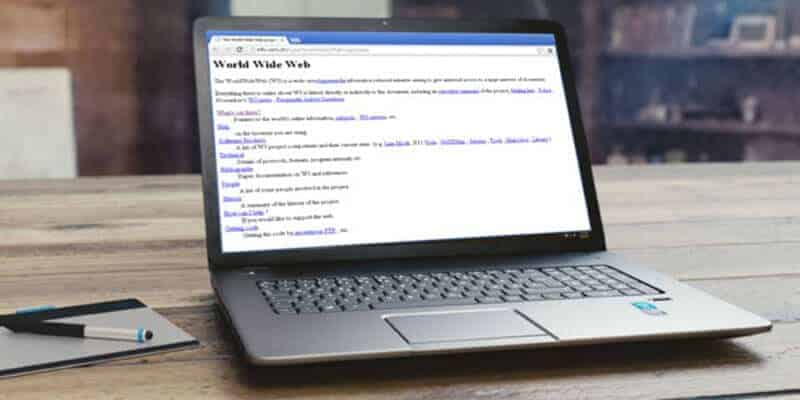
Remember back in the mid-nineties when websites were very new?
They didn’t really serve much of a purpose. Websites were pretty hilarious to look at. Common design features were primary colours, flashing lights, poor quality fonts and non-relevant images.
I was involved in web design at that time: we did it, because we ‘could’.
Surprisingly there are some websites that are still stuck in a bit of a time warp, sporting clunky designs, an overload of information and some pretty poor quality images. And it all goes to prove… just because you ‘could’ didn’t mean you ‘should’.
A website is a massive investment in more ways that one. Many people start a business with the limited knowledge that what they need is a website and logo and they are done. So it hurts a little bit when I hear from people that they have created their own website or even worse “a friend is doing it”.
I know when you first start a business you may not have a lot in the coffers for your business, but no website for a short period of time is a better option than a poor website. In the same vein as a cheap business card, a poor website just gives the wrong impression about who you are, what you do and what you know.
You never get a second chance to make a first impression!
Design is a skill. Good web designers and graphic designers have spent years and years growing their knowledge. They study web design, understand new trends in design, understand how to design a website that works and they get to understand your brand.
A good website is more than a few words and some free stock photos.
I once met a woman, who had bought books on coding and spent weeks designing a website that was, I am sorry to say, awful! She did this because she thought she was saving a fortune. If she had taken the time to calculate the value of her time, she would have realised a job in a supermarket would have been better, so she could save the money to pay for a professional to do it.
Don’t skimp on this, put your money aside to invest in something special, with someone who knows what they are doing.
Having said that, as the client, it’s vital for you to understand what will make your website a success and not what you ‘like’. It’s not about your favourite colour, your face on every page or that you want them to complete a long, complicated form: it’s about why you have a website and what your user needs from it.

What a successful website does
In today’s world, your customer’s journey starts with research online – and this journey, more often than not, begins on a mobile phone.
People are coming to a conclusion on their own as to whether or not they are interested in buying from you — far before you even realise you are being looked at. You need to make sure you have a presence that is helpful and useful.
A successful website does three things:
- It gets people to the website – and for this you have to be found.
- It gets people to stick around after the first glance or two by building trust, educating and nurturing your relationship with this new individual.
- It converts people or gets users to perform the actions you want them to while on your website.
A conversion can be many things from subscribing to a newsletter, to calling you, to making a purchase on your website.

How to ensure a successful website
As a business owner, where website design and development is not your area of expertise, there are certain things a website must have to ensure you’re not wasting your hard-earned money.
It took a long time to pare it down just five, as there are so many things to consider.
In my opinion, these are the five key things to consider when planning, restructuring or executing a website that is going to ‘make it’ in today’s Internet – filled with well over 1.5 billion websites (as of January 2018)!

1. Technology
Before you even consider a website, you need to ensure you technology is ready for what’s coming… There are two key elements: a domain and hosting.
Your domain name is important to your business success. You need to at least give website visitors an idea as to what your business is all about when picking out a domain name. People will often remember you for your domain name.
Over the last 20 years, over 2 billion domain names have been registered. By now all the marketable and generic names in the dictionary have already been registered.
Take the time in choosing the right domain name – it will not only protect your brand and make you look more professional, it also improves search engine rankings, generate traffic and it is a virtual asset to your business.
But here’s why having a good domain name is the first essential step in your quest for success.
- Improves your marketing and visibility
- Builds online and offline credibility
- Gets more website traffic
- Protects your brand
- Increases your search engine ranking
- Is a solid investment
Website hosting is where your company’s website files are stored on a public Internet-facing server. A website cannot exist without being hosted somewhere.
A good host or server gives a business a platform to advertise its goods and services 24 hours a day, 7 days a week, 365 days a year.
But no amount of website planning or design matters if your website is not hosted with a reliable hosting company. Every minute your site is down could mean losing another potential customer. It can also make your business appear unreliable and have a negative impact on your reputation.
How many people know who is hosting their website, where the server is located and how often your website is inaccessible to online visitors? Food for thought!
By having the right hosting, your website will:
- Be available when it really matters
- Load quickly
- Get you the support you need
- Climb up search engine rankings
- Prevent loss of data
Your hosting or server is the foundation that your website lives on. You can build the most beautiful mansion in the world, but if it sits on a foundation of swampland, you’re going to have issues.
ADVICE: Get a great domain name that tells the world what you do and go for the best UK-based host that you can afford – it’s not something worth skimping on!

2. Mobile-first approach
As I mentioned earlier, people are starting their search for your business on a mobile phone. A mobile-compatible website is mandatory these days for any business seeking to remain competitive across channels, given that smartphone browsing makes up 40% of all Internet browsing.
Shockingly, more people will be visiting your website more on a mobile phone than on a desktop in 2018 and onward.
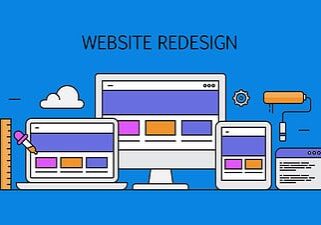
Mobile responsive websites which adapt to the users screen size are nothing new, but 2018 will see a shift towards websites designed around a mobile-first approach, ensuring a visitor’s user experience on a mobile phone is equally impressive as the experience on a desktop.
We’ve started seeing companies offering mobile-specific offers to users and can expect to see more. Mobile responsive means that the designed website responds to whichever mobile device it’s being viewed on. Text gets larger, images get smaller – or disappear, and ultimately it is easier for the user to use your website.
Mobile responsive is not the same as a mobile version of your website. By creating a desktop and mobile version of your website, you dilute your SEO rankings across the two domains rather than having one domain with more authority.
ADVICE: Just because your website can be viewed on a mobile device doesn’t make it mobile-friendly. Check the site on your smartphone and tablet and even your laptop, making sure your site is completely navigable with one thumb, that it requires no pinching or squinting and that it loads quickly, even on a 3G connection.

3. Content is still king
The third key factor to a successful website is having clear, relevant and keyword-rich content that delivers the right message with power and conviction. Good content is what sets your website apart from the masses and should target your audience, engage them and persuade them to take action.
Effective content doesn’t always come in the form of text. As they say, “A picture is worth a thousand words.” In web design, this is particularly the case, as first impressions are most important. Carefully consider your images, videos, illustrations, infographics and diagrams.
Wrap that all up in a content management system. A content management system (CMS) provides a simple, but not insignificant, benefit. It allows you to login to your website and easily make text and photo changes without needing a web developer’s help. You can keep your website updated on your own, so as your business evolves, your site can evolve along with it.
Social media is also a huge part of your content, so ensure it works well with your website and vice versa.
Social Media, SEO, email marketing, vlogs, blogs, newsletters are all party of an ecosystem that you create for your business – ultimately at the centre of all of this is your website.
ADVICE: If you’re not a copywriter, get someone who is really good at building keyword-rich content to create the website copy for you. We have a wonderful client who is a bid writer; his job is writing with so much detail that there is no room for confusion. The only problem was the copy was too much for his website. We worked with him and our excellent web content writer on his content and his website now only presents the best, most concise information.

4. Calls to action
Every page on your website is a landing page or sales page for your business – an opportunity to sell to somebody. Yes, even the About and Contact pages!
In marketing, a call to action (CTA) is an instruction to the audience designed to provoke an immediate response, usually using an imperative verb such as “call now”, “find out more” or “visit a store today”.
Online, clear CTAs work when visitors are prompted to take an action that you want them to take, whether it’s providing you with an email address or phone number, following your blog or on social media, subscribing to your newsletter or downloading a free guide.
Not all CTAs are buttons – you’ve probably experienced:
- Persistent headers (e.g. a hello bar)
- Pop-ups and slide-ins
- Side panels
- Purchase pages
- End of page, article, post
- Ads
All of your website’s power comes to a fine point in the CTA. The user’s action is what it’s all about.
ADVICE: Once you understand the basics of what a CTA is, its function, goal and proper content and usage, then you can use them to create CTAs that improve conversion on your website.

5. Maintenance and future-proof-ability
At PENNInk Productions, we say that “Digital ink never dries”. You can’t just build it and forget it.
We say this, because a website is made up of many moving parts. Having a plan from the start about what is going to happen with your website after it’s launched is essential.
One of the best ways to avoid getting into trouble with woefully outdated web design in the future is to create a website now that could easily be improved later. In other words, you want to lay a solid foundation you can consistently build upon. You have to anticipate that, no matter how well your website works at the moment, there is going to come a time when certain changes need to be made.
By structuring website maintenance and improvement costs into your future budget plan, you can minimise the chances of getting blindsided by an expensive redesign. This will ensure you get the return on investment you want.
ADVICE: Make sure you have a Care Plan or support package for your website moving forward. The very last thing you want is to find out your software, plug-ins and content are out of date and there is no backup when it’s infected with malware.
Conclusion
You’ve had a chance to see:
- What successful used to look like
- What a successful website does
- How to ensure your website is successful
When you’re planning your website, keep things simple – design, navigation, everything. This way, changes are simple and if your website is built in a CMS (WordPress making up over 30% of all websites), it’s easy to make changes moving forward.
For each tip, I’ve provided a little piece of advice – the kind I would give to a client – (and here’s a reminder of what they were):
- Keep it working – ensure you get yourself a good domain name and the best hosting you can afford.
- Keep it responsive – mobile phones, tablets and computer WILL change, make sure your website is structured with a mobile first approach.
- Keep it fresh & flexible – simple, straight-forward design, navigation & fresh content never go out of style! Make sure you can add and remove pages, menu items, posts, images, etc.
- Keep it clear: make sure your users know what you need them to do with clear calls to action on each page.
- Keep it will protected: get yourself a Care Plan or Support package to monitor for updates, security, malware, viruses, hackers and errors moving forward.
No one knows exactly what the future will bring, but we do know that Digital Ink Never Dries!

Lisa Penn is a Visual Communications Specialist with a background in user experience and psychology. She has held a variety of roles encompassing user experience creative strategist, architect and manager, where she has successfully bridged the gap between design, technology and development.